What matters is not just "how much you've lost," but "what you've lost!"
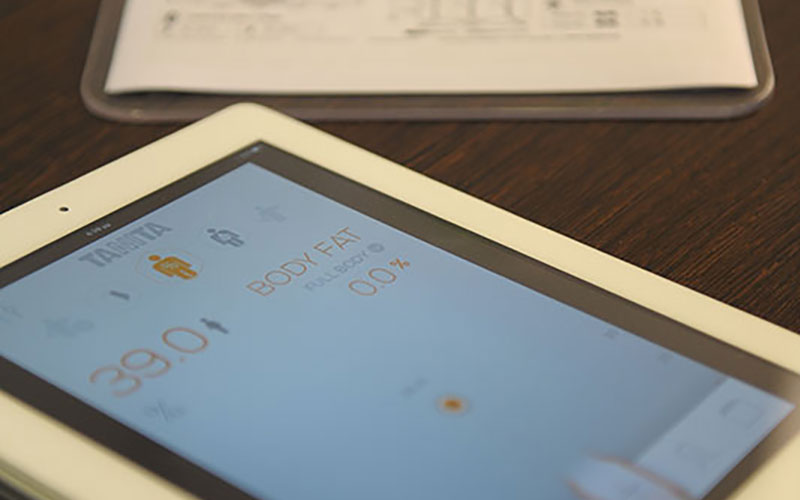
The answer to this is provided by the Body Composition Analysis (also known as Lipometry), using the bioelectrical impedance method.
With specialized equipment, you can measure your body fat percentage, muscle mass, fluids, as well as visceral fat, and track your progress on a monthly basis.
- The first session includes body composition analysis.
- It is provided at no extra charge on a monthly basis for active office members.
- There is also the option for a separate session for measurements, for those who wish to monitor changes in their body composition.
Who is it for?
- Those wishing to start a weight loss or weight gain program
- Those looking to reduce body fat
- Those wishing to increase their muscle mass
- Vegetarians who want to track the changes in their body composition while following a diet plan without animal-based foods
- Those who want a more detailed understanding of their body composition and how it connects to their diet
Steps for Change
- Strong Start: With body composition analysis, you'll have a full picture at the beginning of your journey.
- Follow-up: Repeated measurements on a monthly basis.
- Maintaining Results: Through counseling and continuous material.
Results
- Body Weight
- Body Fat Percentage (%)
- Muscle Mass in Kilograms (kg)
- Muscle Mass Quality
- Segmental Body Composition Analysis
- Body Shape Index
- Bone Mass in Kilograms (kg)
- Visceral Fat
- Basal Metabolic Rate (BMR)
- Metabolic Age
- Total Body Water Percentage (%)