
Dried fruits are essentially a concentrated form of fresh fruits, from which most of the water content has been removed either through natural drying (sun exposure) or using specialized dehydrators.
Dried fruits are consumed in significant quantities worldwide, with dates leading in consumption, followed by raisins, prunes, apricots, and figs.
They are an excellent source of nutrients. Specifically, dried fruits are rich in carbohydrates, containing 68-80g of carbohydrates per 100g of fruit, and low in fat, with only 0.3-1g of fat per 100g of fruit.

Sugars in Dried Fruits
Dried fruits are an excellent source of natural sugars, accounting for 38-63% of their composition, with fructose and glucose being the primary sugars. The sugar content varies depending on the drying method, fruit variety, and place of origin.
Dried Fruits and Dietary Fiber
Dried fruits are also a significant source of dietary fiber. Specifically, they contain 3.7–9.8g of fiber per 100g, contributing substantially to the recommended daily intake of dietary fiber (25–38g, depending on age and gender). This amount corresponds to 1 cup (180g) to 2 cups (360g) of cooked spinach.
A single 40g serving provides more than 9% of the RDI for dietary fiber, with figs being the richest source.
Micronutrients
Lastly, dried fruits are a good source of copper, iron, magnesium, phosphorus, and calcium. Remarkably, a 40g serving (half a cup) of dried fruits ranks among the top sources of potassium.
For instance, 40g of dried banana contains 496mg of potassium, while the same amount of fresh banana contains only 143mg of potassium.
The table below provides the nutritional analysis of the most common dried fruits per 100g.
| Nutrient | Unit | Apricots | Dates | Figs | Prunes | Raisins |
| Water | g | 30.89 | 20.53 | 30.05 | 30.92 | 15.43 |
| Energy | kcal | 241 | 282 | 249 | 240 | 299 |
| Proteins | g | 3.39 | 2.45 | 3.30 | 2.18 | 3.07 |
| Fats | g | 0.51 | 0.39 | 0.93 | 0.38 | 0.46 |
| Carbohydrates | g | 63 | 75 | 64 | 64 | 79 |
| Dietary Fiber | g | 7.3 | 8 | 9.8 | 7.1 | 3.7 |
| Sugars | g | 54 | 63 | 48 | 38 | 59 |
| Minerals | ||||||
| Calcium | mg | 55 | 39 | 162 | 43 | 50 |
| Copper | mg | 0.34 | 0.21 | 0.29 | 0.28 | 0.32 |
| Iron | mg | 2.66 | 1.02 | 2.03 | 0.93 | 1.88 |
| Magnesium | mg | 32 | 43 | 68 | 41 | 32 |
| Phosphorus | mg | 0.24 | 62 | 67 | 69 | 101 |
| Potassium | mg | 71 | 656 | 680 | 732 | 749 |
| Selenium | mg | 1162 | 3 | 0.6 | 0.3 | 0.6 |
| Sodium | mg | 2.2 | 2 | 10 | 2 | 11 |
| Zinc | mg | 0.39 | 0.29 | 0.55 | 0.44 | 0.22 |
| Vitamins | ||||||
|
Folic Acid (B9) |
mg | 10 | 19 | 9 | 4 | 5 |
| Niacin (B3) | mg | 2.59 | 1.27 | 0.62 | 1.88 | 0.77 |
| Pantothenic Acid (B5) | mg | 0.52 | 0.59 | 0.42 | 0.42 | 0.10 |
| Pyridoxine (B6) | mg | 0.14 | 0.17 | 0.11 | 0.21 | 0.17 |
| Riboflavin (B2) | mg | 0.07 | 0.07 | 0.08 | 0.19 | 0.13 |
| Thiamine (B1) | mg | 0.02 | 0.05 | 0.09 | 0.05 | 0.11 |
| Vitamin A | mg | 180 | trace | trace | 39 | |
| Vitamin C | mg | 1.0 | 0.4 | 1.2 | 0.6 | 2.3 |
| Vitamin E | mg | 4.33 | 0.05 | 0.35 | 0.43 | 0.12 |
| Vitamin K | mg | 3.1 | 2.7 | 15.6 | 59.5 | 3.5 |
One notable feature of dried fruits is their high phytochemical content. Phytochemicals are compounds produced or contained by plants, and research shows they have antioxidant properties that protect human cells from various diseases, such as certain cancers, cardiovascular diseases, and other chronic conditions.
Dried fruits contain a wide variety of phytochemicals, including phenolic acids, flavonoids, phytoestrogens, and carotenoids. These compounds exhibit remarkable antioxidant activity, safeguarding the body from free radicals.
Although the drying process may lead to some loss of phytochemicals, the antioxidant capacity and phytochemical content in dried fruits remain significant. This suggests the presence of certain phytochemicals that have yet to be fully identified. Furthermore, dried fruits are concentrated sources of phytochemicals, often containing more per unit weight than fresh fruits.
In terms of antioxidants, prunes are the top performers, followed by apricots.
Impact on Body WeightStudies indicate that consuming dried fruits contributes to maintaining a healthy weight, lower BMI, and reduced waist circumference. This is attributed to their ability to enhance satiety by influencing hormones like leptin, which regulates appetite.
Blood Pressure ReductionDried fruits are rich in potassium and dietary fiber. Increased intake of these nutrients has been shown to help lower blood pressure levels.
Constipation ReliefDried fruits, such as raisins, are a source of prebiotics. They contain fructooligosaccharides like inulin, which, along with dietary fiber, promote healthy gut function.
Cardiovascular HealthPrunes, in particular, contain pectin, a soluble dietary fiber that helps reduce cholesterol levels.
The majority of the health benefits associated with dried fruits are attributed to their phytochemicals and antioxidant properties.
Curbing CravingsMany people struggle with cravings. Dried fruits such as apricots, dates, strawberries, and others can serve as a healthy substitute for sweets. They satisfy the desire for a treat while also promoting health.
Meeting Daily Fruit GoalsResearch shows that many individuals find it challenging to meet their daily recommended fruit intake. Dried fruits can help in this regard, as they are portable, require no preparation, and can be added to various meals. Additionally, they have a longer shelf life compared to fresh fruits, which are often discarded due to overripening.
DiabetesDespite their sweetness, dried fruits might be expected to have a high glycemic index (GI). However, recent studies reveal that most dried fruits have a low (<55) or moderate (56–69) GI. Their effect on glucose and insulin levels is similar to that of fresh fruits.
This unique characteristic is attributed to the fiber, polyphenols, and tannins present in dried fruits.
The table below provides the glycemic index of the most common dried fruits.
| Dried Fruit | Glycemic Index (GI) | Rating |
| Apricots | 30 | Low |
| Dates | 30 | Low |
| Figs | 61 | Medium |
| Plums | 29 | Low |
| Raisins | 52 | Low |
It is important, however, to monitor the quantity of fruits (fresh or dried) consumed and to account for them in the daily carbohydrate intake. Therefore, it is advisable not to include dried fruits in every meal.
If you've been following me for a while, then you know that this is the time when… I collect them 'by the bags,' as they are my favorite fruit.
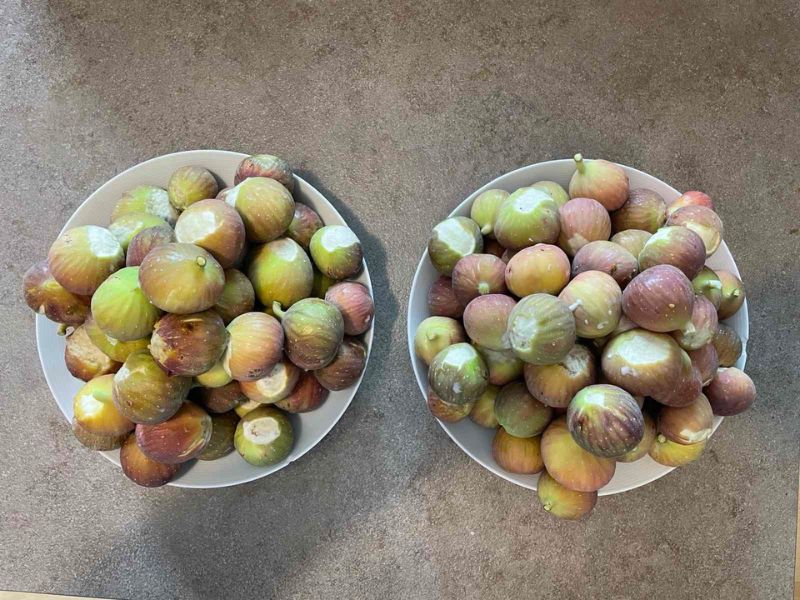
Nutrient-packed, refreshing, and absolutely delicious. In fact, I choose it all year round, even in its dried form! And that’s exactly what I want to talk to you about.
Dried fruits are a concentrated form of fresh fruits, from which most of the water content has been removed. They retain the natural sugars of the fruit from which they originated, also concentrated in their new form. That’s why they might taste a little sweeter. However, take a look at the label of the product you choose, as sometimes sugar is added to dried fruits depending on the drying method.

Since a large amount of water is removed from a fruit, we understand that it becomes a concentrated source of sugars and calories. For this reason, the serving size of dried fruits is smaller than that of fresh fruits.
According to the United States Department of Agriculture (USDA), the serving size for dried fruits ranges from 30 – 40g, depending on the type of fruit. This amount is considered equivalent to one fresh fruit and corresponds to about ¼ of a cup.
For example, one serving of fresh figs (3 figs) contains 111 kcal, while 40g of dried figs contains 100 kcal.
Due to their reduced water content, dried fruits are classified as "calorie-dense." This means they contain a high number of calories in a small amount. For this reason, their consumption should be done in moderation, always keeping an eye on the serving size.
Additionally, consuming dried fruits should be accompanied by an increase in water intake. The reason for this is that when fruits are dried, their water content, as you will see in the table below, significantly decreases, while their fiber content increases. However, without proper hydration, the fiber could have the opposite effect on the digestive system, such as causing constipation.
|
Fruit (100g) |
Water in dried (ml) |
Water in fresh (ml) |
| Apricots | 30.89 | 86.35 |
| Figs | 30.05 | 79.11 |
| Plums | 30.89 | 87.2 |
Another characteristic to watch out for in dried fruits is added sugar. Fruits that have been naturally dried do not contain added sugar. However, in artificial drying methods, sugar or even some vegetable oils are often added. Therefore, it is essential to carefully read the nutritional label before purchasing any product.
Additionally, dried fruits tend to be sticky and often acidic, which can affect your dental health. One way to avoid this is to thoroughly rinse your mouth with water after consumption or to chew sugar-free gum.
It is also important to check for the presence of preservatives on the nutritional label. Carefully check for ingredients like sulfur salts. Sulfites naturally appear in foods and do not cause issues for the vast majority of people. However, one in 100 people may experience an allergy or sensitivity to them, especially those with asthma.
Finally, caution is needed when consuming dried fruits by young children. Specifically, dried fruits should not be consumed by children under one year of age, as they may pose a choking hazard.
Do you have any comments or questions about the article? Send me an email or a message on Messenger. If you want to learn more about how to achieve your nutritional goals, be the first to read my latest posts on the Diaitologos newsletter or become a member of my Facebook Page. Follow me on Instagram and don’t forget to subscribe on YouTube!
Bibliography
Kaliora, A.C., Kountouri, A.M. and Karathanos, V.T., 2009. Antioxidant properties of raisins (Vitis vinifera L.). Journal of medicinal food, 12(6), pp.1302-1309.
Kayano, S.I., Kikuzaki, H., Yamada, N.F., Aoki, A., Kasamatsu, K., Yamasaki, Y., Ikami, T., Suzuki, T., Mitani, T. and Nakatani, N., 2004. Antioxidant properties of prunes (Prunus domestica L.) and their constituents. Biofactors, 21(1‐4), pp.309-313.
Keast, D.R., O’Neil, C.E. and Jones, J.M., 2011. Dried fruit consumption is associated with improved diet quality and reduced obesity in US adults: National Health and Nutrition Examination Survey, 1999-2004. Nutrition research, 31(6), pp.460-467.
Slatnar, A., Klancar, U., Stampar, F. and Veberic, R., 2011. Effect of drying of figs (Ficus carica L.) on the contents of sugars, organic acids, and phenolic compounds. Journal of agricultural and food chemistry, 59(21), pp.11696-11702.
Vinson, J.A., Zubik, L., Bose, P., Samman, N. and Proch, J., 2005. Dried fruits: excellent in vitro and in vivo antioxidants. Journal of the American College of Nutrition, 24(1), pp.44-50.
Williamson, G. and Carughi, A., 2010. Polyphenol content and health benefits of raisins. Nutrition Research, 30(8), pp.511-519.